Blogs · 13 Aug 2026 · 12 min
What we would turn off on your website this week
Popups, autoplay, five nav items that mean the same thing, a dead blog, a chatbot that cannot file a ticket. Turn these off before you redesign.

Josip Tomić
Writes the studio notes. Search, agents, and the sites that hold them.
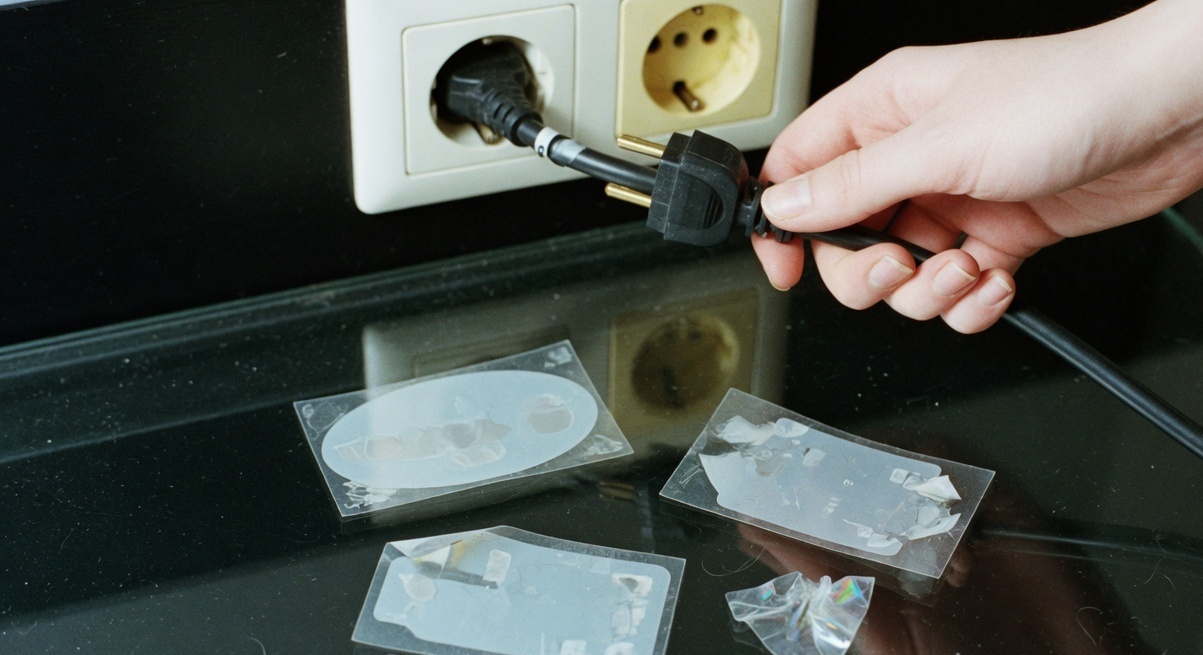
Before a redesign, turn off the things that talk over the page. The popup. The autoplay. The five nav items that mean the same thing. The blog that died in March. The chatbot that cannot file a ticket. Cutting is faster than Figma. Most sites do not need a new first screen. They need silence.
We do not open a file on the first afternoon.
We open the site on a phone, the way a stranger would, and we make a list of what we would switch off before anyone is allowed to talk about colour. The list is usually longer than the founder expects. The founder is used to the noise. The stranger is not.
This is the third line of the audit we wrote on Monday. What a stranger understands in four seconds. What we would measure this week. What we would turn off today.
The third line is the cheapest work we do. It is also the work most teams skip, because turning something off does not look like progress in a deck.
It is progress. The page can be heard again.
What should we turn off first?
The things that steal the first four seconds. Then the things that steal the inquiry. Then the things that steal the crawl.
The order matters. A new homepage with the old popup is a new homepage nobody finished reading. Run the homepage test after each cut, not after the rebuild.
If it talks before the stranger has a sentence, it goes.
Why do we turn off the popup first?
Because it is the first thing that lies.
The page had a sentence. The overlay sits on the sentence and asks for an email, or a discount, or permission to be a worse version of the page. The stranger came for a room. They received a toll booth.
Baymard’s testers said it without marketing language. Overly flashy ads in the prime content were met with negative reactions — “This one is killin’ me” — and pop-up banners and overlays were met with even greater disdain. Their 2025 review put the pattern at 55 percent of sites. Nielsen Norman Group, in 2017, found modal ads in a four-way tie for the most hated advertising technique on desktop. The popups of the early 2000s had reincarnated as modals. Users hated them just as viscerally.
On a phone the overlay is worse. It takes the whole viewport. The close target is a twelve-pixel ghost. The stranger who came from an ad, or from a citation, closes the tab instead.
The red pen does not move the popup later. It kills it. If you need a list, put the list at the end of a page that has already given something. Reciprocity is older than your ESP.
Cookie banners are a legal object, not a growth object. Keep the one the counsel requires. Turn off the second banner that asks for a birthday, and the third that offers 10 percent to leave. Two overlays is not compliance. It is a pile-up.
Why is autoplay on the list?
Because it speaks when nobody asked.
A film that starts itself is a person who sits down at your table and begins a monologue. On a train it is someone else’s monologue. Nielsen Norman Group put autoplay video in that same most-hated group, next to the modal. Automatically playing sound was on the list in 2004. It was still on the list in 2017. It is still on the list.
Luxury houses love the film. We have sat with the film. The film is often beautiful. It is also the reason a collector on a quiet carriage closes the tab before they see the hours.
If the house needs moving pictures, the stranger presses play. That is the whole rule. A still frame with a caption will beat a looping hero on any morning we have run the four-second test.
Baymard’s carousel finding belongs here too. 46 percent of homepage carousels were implemented in a way that causes harm — including the slide that changes a millisecond before the click. Autorotation is autoplay with extra steps. Stop it. Keep the one frame that would survive.
What do we do with five nav items that mean the same thing?
We delete four of them.
Product, Platform, Solutions, Resources, Company. Five doors. Three of them open onto the same corridor. The stranger is being asked to do information architecture before they know whether they are in the right building.
Baymard’s 2025 homepage and navigation benchmark scored 16,000 elements across 180 large ecommerce sites. 58 percent of desktop sites and 67 percent of mobile sites were mediocre to poor at this job. Participants used the homepage as an anchor. When the nav is a museum label for every department, they let go.
Four words, or we are not ready. Work. Services. Journal. Contact. Or the four words the house actually needs. If a fifth word is only there because a stakeholder wanted their department on the bar, the fifth word is a meeting, not a link.
The red pen writes the four words on the print. Then we watch a stranger try to use them. If they hesitate, the words are still dialect.
Why turn off a dead blog?
Because it is a room you left unlocked.
The last post is dated March. The dates are public. The stranger who arrives from a search result, or from a citation, sees a house that stopped speaking. That is not a content strategy. It is a confession.
Google’s guidance for generative features is the same instruction it has always been: write for people. Non-commodity. A point of view. A dead blog is commodity that has started to smell. Semrush’s study of 200,000 AI Overviews found 82 percent of desktop AIOs on keywords under 1,000 monthly searches, and 35 percent of those queries were questions. Questions want an answer you still stand behind. A post you abandoned in March is not that.
If you still rank, and the visits are gone, that is you still rank number one. The dead blog makes the remaining visits worse. They land on a date. They leave.
The local-SEO thread from 2026 is the same complaint in public. Ranking held. The visits did not. A journal you abandoned is not how you win the click that is left.
The red pen has two honest options. Unpublish what you will not stand behind. Or write again, slowly, about the work. A journal with four true notes is a house. A blog with ninety ghosts is a crawl budget with a lapsed calendar.
Princeton’s GEO work — Aggarwal et al., KDD 2024 — found that citations, statistics, and quotations can lift visibility in generative engines by up to about 40 percent. That lift belongs to pages you still mean. It does not belong to a 2019 listicle you will not reread.
Why turn off a chatbot that cannot file a ticket?
Because it is a person at the door who can talk and cannot take your coat.
The widget opens. It asks how it can help. The stranger types a real thing. A refund. A broken order. A collector who needs the Saturday hours. The widget returns a paragraph from the help centre and a smile. There is no ticket. There is no name. There is no morning log.
We have watched teams switch these off after six weeks. Not because the model was dull. Because the inbox did not move. On Aurelia the earlier chat tools had already been killed for this reason. They could talk. They could not do the work.
A chatbot answers. An agent takes action. We wrote the difference down in chatbot vs AI agent. If the widget cannot open a case, tag a product, or wake a person when it should, it is not coverage. It is a costume on the first screen.
G2’s 2026 survey of 1,076 B2B software buyers found 51 percent now start research in an AI chatbot. That is their research, not your widget. Your widget is on the page they finally clicked. If it wastes the click, you have paid for a stranger to be disappointed in a smaller window.
The red pen is simple. Turn it off until it can file. If you need a next step this week, put a form that creates a ticket, or a number that rings. Silence is better than a conversation that cannot end in a record.
When the work is ready, it is not a bubble. It is knowledge, tools, and a handoff. That is web design only in the sense that the first screen has to make room for it. The agent itself is a different brief.
What else goes on the list?
The extras that arrived because a tool was free for a month.
| Turn off | Why this week | What you keep |
|---|---|---|
| Exit-intent, slide-in, tab-title tricks | They talk after the popup you already killed | One offer, at the end, if the page earned it |
| Chat launchers that bounce on load | They steal the first paint | A launcher the stranger opens |
| Three analytics tags that count the same session | They slow the phone | One tag you actually read on Monday |
| Autoplaying testimonials | Motion without a source | A still quote with a name |
| A search icon that opens a blank overlay | A door onto nothing | Search that has an index, or no search |
| “Related posts” under a 2019 ghost | It advertises the death | Links to pages you still mean |
HTTP Archive’s 2024 Web Almanac put numbers on the weight. Median JavaScript reached 558 kilobytes on mobile and 613 on desktop, up 14 percent in a year. About half the bytes downloaded were unused at load — 206 kilobytes, 44 percent, at the mobile median. The median mobile page made 22 script requests.
That is not a redesign. That is a pile of helpers. Each helper was someone’s good idea. Together they are why the first screen arrives after the stranger has already decided.
Third-party scripts are the quiet half of the pile. At the mobile median, HTTP Archive saw more third-party JavaScript by bytes than first-party. You do not need a new art direction to delete a heatmap you have not opened since last spring.
How do we turn things off without breaking the house?
In this order. Numbered because it is a sequence, not a mood.
- Screenshot the first screen on a phone. Write the four-second sentence. Keep the screenshot. You will need it when someone asks what you ruined.
- Kill the overlay and the autoplay. Deploy. Do not wait for a sprint named “UX.”
- Cut the nav to the four words you can defend. Redirect the rest. Do not leave a 404 where a stakeholder used to live.
- Unpublish or date-stamp the dead journal. If you keep a post, you mean it.
- Switch the widget off, or point it at a form that files. No in-between.
- Remove one third-party tag you cannot name the owner of. Then another.
- Run the four-second test again. If the sentence is cleaner, stop. If it is not, the problem was never the popup.
Measure the inquiry, not the bounce. We count forms, booked tables, calls that last longer than ten seconds. If you cannot sit with the number on Monday, it is decoration. The cuts are working when the Monday number is calmer, not when the heatmap is prettier.
When is a redesign actually the next step?
When the first screen is quiet and still cannot be said in a sentence.
Then the work is direction, not hygiene. Type, one photograph, space, a caption. That is the other essay — why AI-generated websites look like each other. Do not buy that work while the popup is still on. You will be paying a studio to design underneath a toll booth.
If the house is a maison, a gallery, a night line, the quiet will show you whether the room has a temperature. If it does not, now you may open a file.
What do we want from you this week?
The live URL. A screenshot of the first screen on your own phone. A list of every overlay, widget, and tag you can remember approving.
Do not send the deck. Do not send the brand book. Send the noise.
We will write back with what we would turn off before anyone is allowed to talk about a rebuild, and what we would leave on because it is doing a job. Write to us with the URL and the screenshot. You keep the note even if we never work together.
FAQ
Will turning things off hurt conversion?
It can hurt a vanity number and help the inquiry. Overlays inflate emails and suppress the thing you actually sell. Baymard’s testers met homepage pop-ups with disdain, not delight. Measure forms, calls, and bookings for two Mondays after the cut. If those fall, put back only the one object that earned its place — never the pile.
What if legal says we need the cookie banner?
Keep the one counsel requires. Turn off everything that arrived on its coat-tails: the second modal, the email gate, the slide-in that follows a yes. Compliance is a sentence. Growth theatre is a stack. If the required banner is a wall, the work is to make it a line, not to add a discount on top.
Can we leave the chatbot on if we rewrite the greeting?
No. A warmer greeting that still cannot file a ticket is a more polite failure. Either the widget opens a case, tags a product, and hands off, or it is off. The difference is in chatbot vs AI agent. Copy is not a tool. A smile without a record is still a closed door.
Should we delete the whole blog?
Delete what you will not stand behind. Keep what you would still send to a buyer. A short journal with dates you can defend will outperform a graveyard in search, in citations, and in the four seconds after someone arrives. Unpublishing is not a failure. It is maintenance. Ninety ghosts are not a strategy.
How do we know which nav items mean the same thing?
Read them out loud to someone who does not work there. If they cannot tell Solutions from Platform, they are the same item. If two links open onto overlapping pages, they are the same item. Four words. If a fifth exists only because a department wanted a door, the door is a meeting.
Does this replace a redesign?
It precedes one. Most sites we are sent do not need new walls. They need the things that were nailed to the walls taken down. If the first screen is quiet and still fails the homepage test, then you have a direction problem, and a rebuild has a job. Doing the rebuild first is how you get a beautiful popup.
What should we measure after the cuts?
The number you can sit with on Monday. Inquiries. Not overlay close-rates, not time-on-page for a film nobody asked to see. If the inquiry is quiet after the page is quiet, the problem has moved — offer, speed, or a first screen that still cannot be said in a sentence.
More from the journal
14 Aug 2026·16 min
YourGPT review: what it does after the demo
A practitioner review of YourGPT — what the agent platform actually is, what the plans cost, where it fails, and when we would not install it.
Josip Tomić
Partner
13 Aug 2026·12 min
You still rank #1. The visits are gone. Now what
You still rank number one. The visits are gone. A diagnostic for algorithm hits, AI Overviews that ate the click, and pages that never converted.
Josip Tomić
Partner