Blogs · 15 Aug 2026 · 10 min
Rebuild the website, or repair the one you have
When to refresh, redesign, or rebuild a marketing site. Five honest signals, sourced cost ranges, and why the sales team already voted with the URL.

Kavya Iyer
Content lead
Content lead, based in India. She writes and directs the marketing: campaigns, landing pages, and the copy that has to convert.
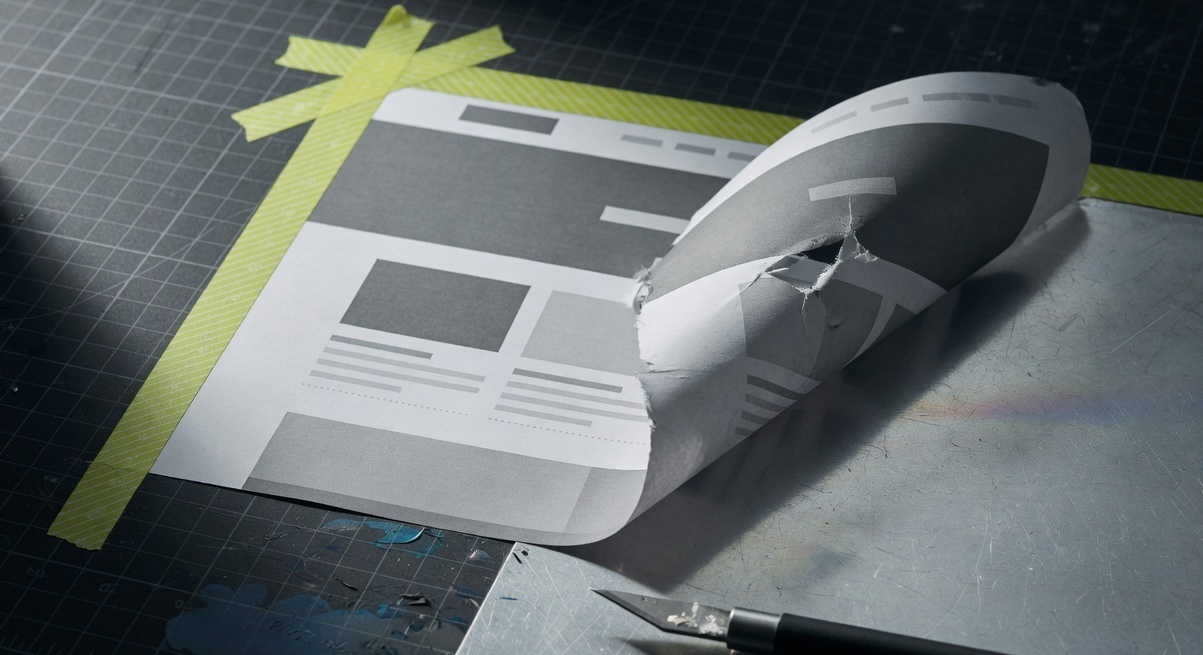
Do not rebuild because the site is old. Rebuild when the sales team will not send the URL, when the current tool cannot take an ads page or an agent, or when a stranger cannot tell what you sell in four seconds. A refresh costs less and keeps the pages you already earned.
A founder wrote last month and asked for a rebuild. The site was four years old. The logo had changed. A competitor had launched something pale and fast. The brief was one sentence: it looks dated.
We opened the URL. The offer was clear. The form arrived. The Monday number existed. The sales team already sent the link. The photography was tired. The type was a size off.
That is a refresh. It is not a rebuild.
The expensive mistake is starting over because a template looks newer than you. The other one is polishing a site the sales team will not send.
What is the difference between a refresh, a redesign, and a rebuild?
People use the three words as if they were one invoice. They are not.
A refresh keeps the URL, the sitemap, the CMS, and most of the pages. You change type, colour, photography, the hero, the form. A stranger still lands on the same URLs. Google still knows them.
A redesign keeps the domain and usually the stack. You rewrite the information architecture. Pages merge. Offers move. The homepage is a new argument. Redirects are a project, not an afterthought.
A rebuild changes the stack, or the sitemap so thoroughly that the old site is a source file, not a base. Webflow to Next.js. A page builder to something you own. A brochure that cannot take an agent or a landing page for ads.
Tenet’s redesign ranges run from $3,000 to $160,000+. Innowise, August 2026, talks about rebuilds in hours: $10,000–$25,000 (50–150 hours), $30,000–$80,000 (200–600), $100,000–$200,000+ (800–2,000+). We published the longer invoice in what a marketing website should cost. The point here is simpler: a refresh sits at the bottom of those bands. A rebuild sits at the top, plus the month you are in two sites at once.
| Job | You keep | You change | Typical reason |
|---|---|---|---|
| Refresh | URLs, CMS, sitemap | Type, photos, hero, form | It looks tired. It still works |
| Redesign | Domain, usually the stack | IA, offers, homepage argument | The pages are in the wrong order |
| Rebuild | The domain, if you are lucky | The stack, most templates, the handoff | The stack cannot do the next job |
If you can name the three pages that are wrong, you are not in a rebuild. You are in a short list of fixes.
When is a repair enough?
A repair is enough when the site already does the job a stranger hired it to do.
The homepage test still holds. Four seconds. Who you are, what you sell, what to do next. If a stranger can say those three lines, do not burn the sitemap because a designer is bored.
Repair when:
- The sales team already sends the URL. They do not attach a PDF “because the site doesn’t explain it.” That is the most honest metric in the building.
- The form arrives, and someone answers it. Tracking exists. The Monday number is a number, not a feeling. We wrote that in the number on Monday.
- The CMS is owned. A marketer can change the offer on Thursday without a pull request they are afraid of.
- The pages that rank are true. You are not about to throw away URLs an answer engine already cites. See you still rank number one.
- The stack can take the next job. One new landing page. One agent. One journal. You should not need a new vendor for that.
Nielsen Norman Group’s note on communicating trustworthiness is four pillars: design quality, upfront disclosure, comprehensive content, and third-party validation. A dated typeface fails the first. A missing price, a missing address, a missing person fails the second and third. You can fix those without a new stack.
Google’s 2016 mobile speed note is old, and still the number people quote: 53 percent of mobile visits leave a page that takes longer than three seconds. That is often a repair — images, hosting, the third script the last agency left in the header. It is a rebuild only if the page builder cannot get out of its own way.
When should you rebuild?
Rebuild when the current site cannot tell the truth, or cannot take the next job, and no amount of type will change that.
The sales team will not send it. They paste a Notion, a deck, a Loom. They say “the site is a bit behind.” That is not taste. That is a vote.
The homepage fails in four seconds, and the CMS cannot be saved. The offer is three metaphors. The button says Get started. The template will not let you put a person, a price, or a real photograph where the stranger looks first.
The stack refuses the work you now have. You need an ads landing that is not a clone of the homepage. You need an agent that can point at a true page. You need photography that cannot live in a page builder’s five-megabyte ceiling. You need a file stack the models can read. The current tool was bought for a brochure.
The site is a liability. Legal copy is three years out of date. The form posts to an inbox nobody owns. Mobile is not “a bit tight.” It is unusable. Baymard’s mobile UX work has spent a decade showing how often large sites still fail basic mobile tasks. You do not need their full benchmark to know your own checkout, or your own contact path, is broken. If a stranger on a phone cannot finish the one job, and the theme will not let you fix the path, stop decorating it.
You are about to spend on ads, or on an agent, on top of a lie. An agent trained on a contradictory sitemap will be fluent and wrong. We wrote that in the document was wrong. Ads pointed at a homepage that cannot close the sentence will burn the week. Rebuild the page, or do not buy the traffic.
A rebuild is also honest when the last studio left you a tool nobody on the team will open. That is not nostalgia. That is operations. How to choose a studio is the hiring version of the same fact: if they will not sit with the week after launch, you will be back here in eighteen months.
What do you lose if you rebuild for no reason?
You lose the URLs Google already understands, and the citations an answer engine already made. You also spend a quarter of the marketing team’s year on a project that was really a photograph and a headline.
Redirects are not free. They are a list someone has to write, test, and watch. Miss three of them and the pages that paid for themselves last year become 404s with better type.
You also lose the evidence the old site already collected: the offer that sold, the page that ranked, the form people finished. A rebuild that starts from a moodboard throws that out, then spends two months finding it again.
GoodFirms’ 2026 construction survey is the industry talking to itself: 98 percent of firms now use AI, and simple sites that used to cost $5,000 often land under $1,500. That is the temptation. It is also why so many rebuilds look like each other. If the only reason to start over is that a model will do it cheap, keep the current site and spend the money on photography and the sentence on the homepage.
How do we decide on a real brief?
We do not start in Figma. We start in the inbox and the live URL.
- Run the four-second test on the current homepage. Write the three lines. If we can write them, the argument might already be there.
- Ask sales for the last ten forwards. Site, or PDF, or silence.
- Open last week’s inquiries, or last week’s tickets. The repeats are the pages. That method is in the tickets already wrote the brief.
- Name the next job the stack must take. Ads. Agent. Journal. Local pages. If the current CMS can do that job, we are not rebuilding.
- Price the short list against a rebuild. Three pages, new photography, a form, the header script — that is a refresh. A new stack, new IA, new templates, two months of redirects — that is the other invoice.
On Eternal the last site was a catalogue. Collectors left. That was a rebuild: the site had to become a sequence of rooms. On a lot of service businesses the last site is a slightly tired page that already ranks. That is a refresh. A studio that will not say so is selling a rebuild.
If the work is web, we will tell you which of the three you are in before we talk about type.
What should you keep if you do rebuild?
Keep the domain. Keep the pages that earn. Keep the sentences customers already use. Keep the measurement.
Redirect every URL that has ever ranked, been cited, or been sent by sales. Build the new sitemap from the old one, plus the five questions the inbox already repeats. Do not invent a blog because a proposal template has a blog.
If you are moving stacks — Webflow to Next.js, or a page builder to something you own — do it because of the week after launch, not because of a keynote. We still design in Figma. We still ship the site. The file is not the site.
The studio
If you need help, we will tell you whether this is a refresh before we quote a rebuild. We open the live URL, last week’s inquiries, and the pages sales already refuse to send. You get a written note: keep, fix, or start over — and what we would ship first either way.
Send the current site and one sentence about what is not working. We write back within a day. Start at contact.
Frequently asked questions
How often should you rebuild a website?
There is no honest calendar. “Every three to five years” is a habit, not a measurement. Rebuild when the stack cannot take the next job, or when the people who sell will not send the URL. Refresh when the argument still holds and the site looks tired.
How much does a website rebuild cost in 2026?
Treat public ranges as ranges. Tenet puts professional redesigns at $3,000 to $160,000+. Innowise describes rebuilds from about $10,000 to $200,000+ by hours. A refresh of type, photography, and a form sits far below that. We broke the invoice down in what a marketing website should cost.
Will a rebuild hurt our SEO and AI citations?
It can. You lose what you do not redirect, and you confuse what you rewrite without keeping the facts. If you already rank, or already get cited, a rebuild is a risk you take on purpose. Sometimes the current pages are the asset. We wrote the citation job in how to get cited.
Is a Framer or Figma Sites publish a rebuild?
It is a new host. It is only a rebuild if you move the company there. A six-week campaign can live on Sites or Framer. The brand site that has to take ads and an agent usually should not. That is the Figma review in one line.
Can AI rebuild the site for us this afternoon?
It can generate a site this afternoon. GoodFirms already put that work under $1,500 for a lot of firms. What it will not do is decide which pages to keep, which sentences are true, or whether sales will send the URL. If all you need is a site that exists, do not hire us.
Should we rebuild before we install an AI agent?
If the help centre and the site contradict each other, yes — or at least repair the pages the agent will read. An agent on a lying sitemap is a fluent liar. Start from last week’s tickets, then decide if the site is the project.
Send the current URL and the sentence that is not working to hello@simplexdigital.agency. We write back with keep, fix, or start over.
More from the journal
15 Aug 2026·10 min
The tickets already wrote the brief
Do not start with a chatbot wishlist. Last week’s inbox already named the work. How we read tickets, write a brief, and decide what not to build.

Josip Tomić
Partner
15 Aug 2026·9 min
Last week's inquiries are the brief
Before a call, send the live site and last week's form emails. We write back with what the homepage should say and which pages we would leave alone.
Josip Tomić
Partner