Blogs · 15 Aug 2026 · 9 min
Last week's inquiries are the brief
Before a call, send the live site and last week's form emails. We write back with what the homepage should say and which pages we would leave alone.

Josip Tomić
Partner
Partner at Simplex. He leads the AI agent work on YourGPT — the knowledge, the functions, and the site the agent sits on — and writes the studio reviews.
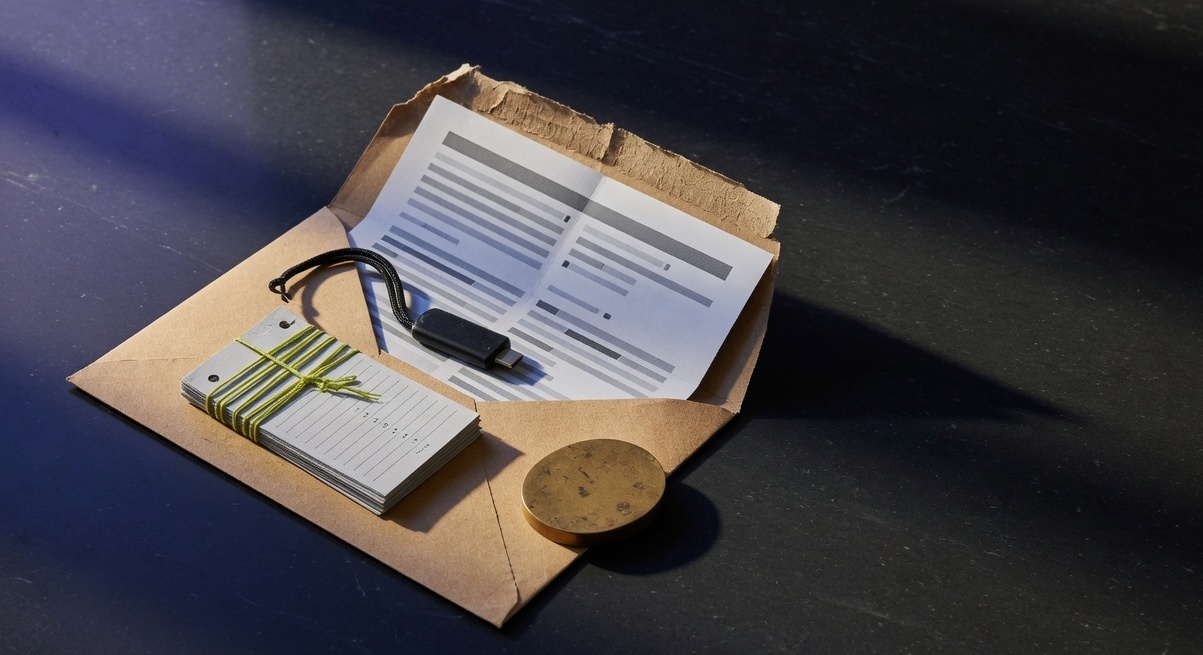
Before we get on a call, send the live site and last week's form emails. Add the three pages you would rather we did not open. Write one sentence about what the new site has to do. We can work from a Figma file later. We cannot guess the week you already had.
A founder wrote last Tuesday and asked if we could jump on a call. Attached: a Pinterest board, a Framer link someone liked, and a line about wanting the site to feel premium. No URL for the live site. No form emails.
We can take the call. We will still ask for the same things. If we skip that and go straight to type, we spend the third week finding out what people already wrote in to ask.
Last week's inbox is ruder than a moodboard. That is why it is useful.
What do we need from you before a call?
One email is enough. Attachments are fine. It does not have to look tidy.
| Send this | What we use it for |
|---|---|
| The live URL, even if you hate it | What a stranger already understands in four seconds |
| A week of form replies, sales emails, or tickets | Which questions keep arriving |
| Three pages you would rather not show | Where the site is lying, or staying quiet |
| One job for the new site | Ads, hiring, booking, explaining a price. One. |
| Who answers the form, and where it goes | Whether a new form would die in the same inbox |
| Analytics or Search Console, if you already have them | Whether anyone reaches the pages you think they do |
If the work is an agent, send last week's tickets instead of a chatbot wishlist. That is the tickets already wrote the brief. If the work is a site, send last week's inquiries. Same idea. Different pile of mail.
A Figma file helps if the work is already in progress. It does not replace the live site. We wrote how we treat that file in the Figma review. Moodboards and Make links can come in a second email.
Why last week's emails beat a brand workshop
A workshop describes the company you wish you were. A week of inquiries describes the company people already tried to hire.
We read the week the way we read tickets.
- Group by the question the person actually asked, not by the tag someone applied later.
- Count the groups. The top five are pages, or answers the homepage should have given.
- Mark each group: a true page could have closed this, a person has to finish this, or an ad landed on the wrong offer.
- Open the three longest threads. Read them to the end. The end is where the site went quiet.
- Write one page: what the site must say, what it should not promise, and what still needs a person.
That takes an afternoon. It saves a month of designing the wrong offer.
You do not need a persona for a question that already fills the inbox. You need last Tuesday.
If the inbox is sales, last week's inquiries are the brief. If the inbox is support, last week's tickets are the brief. If both are empty because nobody can find the form, that is also a brief. We will say that in the note.
Which pages should you send even if you hate them?
Every company has a few. The pricing page that only says “contact us.” The about page with a photograph nobody on the team can name. The services page that lists tools. The homepage that cannot finish a sentence in four seconds.
Send those URLs. You do not need to explain them on the first email. We will open them on our own. The story is usually a previous vendor, a launch that ran out of time, or a price nobody wanted to publish. Fine. The page is still what a stranger sees.
Those pages are often missing a person, a price, or a plain sentence. That is not always a rebuild. Sometimes you just have to publish the thing you have been avoiding. We wrote that decision in rebuild or repair.
On Meridian the weak page talked about the product and never named the job. The inquiries already named it. We did not need a workshop to find the sentence.
How do you pick one job for the new site?
A site that tries to hire, sell, book, explain, and look impressive on the same scroll usually does none of those well.
Pick one job for the first version.
- Ads are landing and the page cannot close. That is a landing-page job. We wrote that in landing pages for ads and agents.
- Sales will not send the URL. That is a homepage and services job.
- The inbox is the same five questions. That is a knowledge job, and maybe an agent.
- Collectors have to feel the rooms. That is direction. Eternal was that job.
- Nights have to be covered. That is operations, plus a site that can hand a thread to a person. Vesper was that job.
A journal can wait. A careers page can wait. A second language can wait. If you list six jobs, the quote will look like a rebuild even when three pages would have done.
What should you leave out of the first email?
A long brand book and no URL. We will read the book. We will still open the live site first.
A list of competitors and no sentence about what you refuse. “Like theirs, but us” is how you get a site that could belong to anyone. How you hire matters more than the reference board.
Every login on day one. Analytics and Search Console help, if you have them. The CMS, the domain, and the ad account can wait until there is a written note and a yes. Do not put passwords in the first email.
A list of features. Chat widget. Members area. Animation. AI. Those are a catalogue. If you need an agent, send tickets. If you need motion, say where it has to live.
A Figma Make link as the company. We will click it. We will not treat it as the site.
How do we read what you send?
We read it before we talk.
We open the homepage, count four seconds, and write the three lines a stranger got. We skim last week's mail and mark the five questions that keep showing up. We open the three pages you dislike. We check whether the form goes to a person who will see it.
Then we write back. Keep the site and fix a few pages. Rewrite the argument. Or start over. We say what we would put on the homepage, what we would not build, and whether this is web, marketing, an agent, or a stack question we already mapped in Next.js vs Webflow vs Framer.
The call, if you still want one, is about that note. It is not a tour of a site you already live in. We need the week you have not sat with.
If the first email is only a moodboard, we still reply. The reply will ask for last week. That is how we avoid quoting a rebuild when the real work is photography and one sentence.
What a useful first email looks like
The last one that helped was not pretty.
The live URL. Two pages they did not want us to see — services, and the form. A forward of the week's form mail, still in the original threads. One sentence: sales keeps sending a PDF because the homepage will not carry the meeting.
We did not need a call to see it. The homepage never said who they take. Half the week was that question, in different words. The software was fine. We sent a short list of what to fix.
Analytics and Search Console, if you have them, tell us whether anyone already arrives, and from where. A guest link, or a screenshot of the last 28 days by landing page, is enough. Sometimes the homepage is quiet and an old journal post is doing the work.
If you already have a Figma file, send view access and point at the homepage frame. If the file is a pile of exports and no system, say so. We would rather know that before we get on a call.
What happens after you send it?
A written note within a day. That is the studio rule. It is on the contact page.
The note is not a proposal. It is what we saw, what we would not do, and whether we are the right people. If you need a Webflow editor every Thursday, or a Shopify inbox we would not replace, we say so. If we are the right people, the next step is a short scope: pages, photography, tracking, the week after launch. Money comes after that, not in the first email.
You do not need a deck to start. You need the site you already have, and the week it already produced.
The studio
If you want help, send the current site and last week's form emails. Add three pages you dislike and one sentence for the job. We write back with keep, fix, or start over — and whether the work is a site, an agent, or both.
Email hello@simplexdigital.agency or use contact. A written note in 24 hours.
Frequently asked questions
Do we need a Figma file before we talk?
No. A live URL is enough. A Figma file helps if the work is already in progress. A Make prototype is something we will click, not a brief. If you want us to start from a file, send the file and the live site. We covered that in the Figma note.
What if we have no inquiries yet?
Send the ads account, or the emails people already write, or the questions sales already answers on the phone. An empty form log still tells us something: either nobody can find the form, or nobody wants what the page offers. We can work from that.
What if the current site is embarrassing?
Send it anyway. Especially then. The pages you hide are often the ones we need. We will not publish them. We need to see them.
Can we just book a call?
You can. We will still ask for the site and last week's mail. The call is cheaper after we have read that. If you only have a short slot, spend it on the email, not on sharing a homepage we can open ourselves.
Is this the same as an RFP?
No. An RFP is a feature list several vendors bid on. This is last week's mail and the live site. If your process requires an RFP, attach those two things to it. The vendor who ignores them will design the wrong site at a tidy price.
What do you send back?
A written note. What a stranger understood in four seconds. The five questions the week repeated. Keep, fix, or start over. What we would not do. Whether it is worth talking. That is the first step.
How much time does the first email take?
About an hour if last week is already in one inbox. If inquiries live in three places, forward the last seven days and do not tidy the subject lines. The mess is useful. A brand workshop can wait until there is a yes.
Send the current site and last week's inquiries to hello@simplexdigital.agency. We write back within a day.
More from the journal
15 Aug 2026·10 min
Rebuild the website, or repair the one you have
When to refresh, redesign, or rebuild a marketing site. Five honest signals, sourced cost ranges, and why the sales team already voted with the URL.

Kavya Iyer
Content lead
15 Aug 2026·10 min
The tickets already wrote the brief
Do not start with a chatbot wishlist. Last week’s inbox already named the work. How we read tickets, write a brief, and decide what not to build.
Josip Tomić
Partner