Blogs · 13 Aug 2026 · 14 min
The ad creative that survived when we refused to touch the landing page
We kept the landing page frozen and tested four creative patterns against one inquiry number. What to kill, what to keep, and why the picture matters.

Kavya Iyer
Content lead
Content lead, based in India. She writes and directs the marketing: campaigns, landing pages, and the copy that has to convert.

Freeze the URL. Ship four patterns of picture and line. Keep the one that produces inquiries you can sit with. Kill the rest, including the clever frame that only wins the click. This is a method for creative, not a new landing page, and not a ROAS story.
The client wanted a new page. The old one was not pretty. It was clear. The H1 was the offer. The form asked for a name and a work email. People who arrived understood the sentence. People who did not convert were not confused. They were unconvinced.
A redesign would have felt like progress. It would also have destroyed the only control we had. So we refused. Same URL. New pictures. New lines. One inquiry event. The Monday number would decide.
That is the whole method.
We run this under marketing. On Meridian the weekly board already holds the ads, the spend, and the pages. Creative is designed against what last week proved. This note is about the picture and the line. The number you sit with is the other essay. We are not rewriting it.
Why freeze the landing page while you test creative?
Because otherwise you learn nothing.
If you change the H1 and the hook in the same week, the inquiry movement has two parents. Meetings then argue about taste. Taste is not a test.
Google still tells advertisers to write different versions of the ad and to hold 3 to 5 ads in an ad group, so the system can show the stronger ones (Optimize your ads and landing pages). That advice assumes the destination is stable enough to compare the ads. Meta’s A/B documentation is even plainer: pick a hypothesis, change one variable, and run at least 7 days — tests shorter than that can lie, and none may run longer than 30 (A/B test creation).
Nielsen’s older work on advertising effectiveness is still the reminder we use: creative carries more of the lift than people budget for (Nielsen). We do not treat a 2017 split as a 2026 measurement. We treat it as a reason to freeze the page and change the picture.
Meta’s 2025 note on Andromeda makes the current version of that argument: as ranking becomes more automated, creative diversification is the lever you still own. Upload different themes and messages; let the system find who each one is for (The Creative Advantage). Diversification is not 40 near-duplicates of the same stock crop. It is four different ways to tell the same offer, landing on the same page.
If the page moves, you are not diversifying creative. You are starting over.
The page we freeze is the one the campaign and the agent can both use. Message match stays. The inquiry event stays. We change what the person sees before they arrive.
What is the method, in one pass?
One URL. Four patterns. One inquiry number.
The inquiry number is a method, not a trophy. We do not publish a client ROAS here. We do not invent a cost per lead and call it a case study. Meridian’s published result is a board, not a multiple. Eternal’s published result is a feeling in the rooms. That honesty is the point.
What we do publish is how the week is run.
Rules we do not negotiate:
- The destination URL does not change.
- The offer does not change. No new discount in ad 3.
- The conversion action is
inquiry. Not thumb-stop. Not 15-second view. - Each pattern is a different kind of picture and line, not a colour swap.
- We read the account after a full week, not after an afternoon.
- We kill on inquiries, then on whether those inquiries were real.
Google’s Quality Score article is useful here in one direction only: expected CTR, ad relevance, landing-page experience (the three components). We do not optimise the score. We use the split as a diagnosis. High CTR and empty inbox means the line oversold the page. Low CTR and decent inquiry rate means the line is too quiet. High both is the survivor.
What are the four creative patterns?
Four is enough to be different. More than four in week one is how you get no reads.
All four share the offer. All four share the URL. All four share the CTA verb. The picture and the sentence change.
Pattern 1 — The line
A still. Product or board or object, no person. The sentence is the offer, set like a caption.
This is the control. If you cannot win a click with the offer in plain type, the offer is the problem, not the art direction. On Search, this is the responsive ad whose headlines are all versions of the promise. On Meta, it is a 4
still that does not try to be a film.Kill it if nobody stops. Keep it if it is quiet and cheap and the inquiries are the right ones. Quiet and cheap is a survivor more often than decks admit.
Pattern 2 — The face
A person looking at the camera, or looking at the work. Same sentence, shorter if it must be. The face does the stopping. The line does the matching.
This is not “UGC” as a costume. A founder, a customer, a maker — someone who would exist if the ads were off. Stock faces read as stock. Meta will still spend. Monday will not thank you.
Kill it if the comments are about the person and the form is empty. Keep it if the desk says “they already knew what they wanted.”
Pattern 3 — The proof
One specific claim the page already makes. A time. A constraint. A named process. “One board. The ads, the spend, the pages.” Not “trusted by teams worldwide.”
Nielsen’s split still applies: quality and messaging carry the creative contribution. A proof pattern is messaging with its clothes on. If the page cannot back the claim, this pattern is a lie and will convert into angry calls. That is useful. It is also how you lose the account.
Kill it if the claim has to be footnoted into nothing. Keep it if the inquiry emails repeat the claim back.
Pattern 4 — The scene
The work in the room it belongs in. The board at dusk. The desk with a ticket already open. The object in a hand, not on a white sweep.
This is usually the most expensive to make and the easiest to romanticise. It survives when the category needs to be felt before it is understood. It dies when the scene is prettier than the offer. Eternal can live here. A lead-gen audit usually cannot.
Kill it if CTR is lovely and the form is “just looking.” Keep it if the conversations start further along.
| Pattern | Picture | Line | Typical death | Typical survival |
|---|---|---|---|---|
| The line | Still, no person | The offer, verbatim | No one stops | Cheap, exact inquiries |
| The face | A real person | Offer, shorter | Fan mail, no form | Pre-qualified conversations |
| The proof | Type, or a number in the frame | The claim the page already prints | Claim does not hold | Emails that quote you |
| The scene | The work in situ | Offer as caption | Tourism | Buyers who felt it |
We do not owe each pattern equal spend after day four. We owe them equal honesty at the start.
What do you kill, and what do you keep?
Kill on the inquiry, then on the quality of the inquiry. Not on the screenshot.
Kill
- The line that is not on the page. If the ad invents a gift, a date, or a price the URL does not keep, it is not creative. It is bait. Google’s landing-page note uses the 20% off shoes example for a reason.
- The frame that wins the click and loses the person. High CTR, low
inquiry, comments about the music. That creative is a tax on the account. - Near-duplicates. Four crops of the same still are not four patterns. Andromeda can rank among diverse ads. It cannot invent diversity you did not make. Meta’s own Advantage+ creative tests — image generation on, vs off — published 11% higher CTR and 7.6% higher conversion rate for campaigns using that feature (April 2025). That is their study, on their tool. It is not a reason to generate 30 cousins of the loser.
- Testimonials the page does not show. The survivor has to land somewhere true.
- Carousels that tell five stories. One card, one offer.
- Any cut that needs a meeting to explain. If the media buyer cannot say what the ad is claiming in one sentence, the stranger cannot either.
Keep
- The sentence that is also the H1. That is message match you can defend.
- The picture that stops the thumb without changing the deal.
- The CTA verb the form still uses. “Get the board” does not become “Learn more” in the ad and “Submit” on the page.
- The boring winner. If Pattern 1 is unfashionable and it fills the sheet, it stays. We iterate the still. We do not punish it for failing a mood board.
- The comment that is a question the FAQ already answers. That is a person mid-way. Reply. Do not replace the ad with a new offer.
Ben Paster at Dribbleup, quoted by Meta: they went from 3–4 new creatives a week to almost 50 on average, production in house, so the loop between creative and buying stayed tight. Volume is not the lesson we steal. The loop is. A studio that ships four honest patterns and reads them on Monday will beat a studio that ships fifty cousins and reads ROAS on a dashboard nobody trusts.
How do you read the week without inventing ROAS?
You sit with inquiries.
Spend in. Inquiries out. Cost per inquiry. Then a human look at ten of them. That is the method. Revenue multiples belong to finance and to a longer window. Publishing a client ROAS we did not earn is how agencies get loud and then get fired.
A practical table for the weekly board — the one Meridian runs in a room, not in a PDF:
| Column | What it is | What it is not |
|---|---|---|
| Spend | What left the account | A target you apologise to |
| Clicks | People who accepted the line | Demand |
| CTR | Whether the picture and line stopped anyone | Success |
inquiry | Forms, real calls, agent handoffs | Chats started, views, dwell |
| Cost / inquiry | Spend ÷ inquiries | ROAS |
| Desk note | “These were the right people” / “these were tourists” | A vibe |
If Pattern 2 has a worse CTR and a better cost per inquiry, it is winning. If Pattern 4 has a beautiful frequency graph and three “just wanted to say I love the film” emails, it is losing.
Google will show you conversion rate next to the ads. Use it. They also remind you a more specific ad can lower CTR and raise conversions (Quality Score piece). That paragraph is the whole case for not killing the quiet survivor.
Meta’s creative tests can compare up to seven variants with even delivery (Set up a creative test). Use that when you need a clean read. Use a simpler split when you need speed. Do not run both on the same ads and then argue about contamination.
What does this look like on Meta versus Google?
Same method. Different objects.
Meta
The auction is now a creative auction wearing a targeting costume. Andromeda improved ads quality by 8% in Meta’s telling. Advantage+ sales campaigns published a 9% lower cost per action on the streamlined setup. Those are Meta’s numbers, 2025, on Meta’s products. What we take is the instruction: give the system different themes, not one theme in five grades of beige.
Practical:
- One campaign, one offer, one URL.
- Four ads, four patterns.
- If you turn generation on, review the outputs as if a junior wrote them.
- Reels and stills of the same pattern are two files, not two patterns.
- A repeated comment belongs on the page FAQ, not as a new headline until the page says it.
Search still starts with the query. The “picture” is often the headline and the sitelink. The method holds: several ads, one landing page, one inquiry.
Practical:
- 3–5 ads in the ad group, as Google asks.
- Headlines that are Pattern 1 and Pattern 3. Faces and scenes belong in Demand Gen and YouTube, not in a text ad.
- Sitelinks that go to sections of the same URL or to the same offer. A sitelink to a different promise is a second campaign pretending to be an asset.
- Watch search terms. A winning line that pulls the wrong queries is a negative-keyword job, not a new page.
Demand Gen and YouTube get the face and the scene. They still land on the frozen URL.
How does Meridian actually run the board?
Meridian arrived with Meta and Google in three logins and creative in Slack. Nobody in the room could say what was working. We did not start with a new landing page. We started with one board: the ads, the spend, the pages.
The surviving creative on that kind of account is rarely the one that won the first review. It is the one that still produces inquiries after the novelty week. The picture gets tired. Frequency goes up. Pattern 2’s face wears out faster than Pattern 1’s still. That is expected. You iterate the survivor — a new crop, a new proof, a new person — without thawing the page.
When the page finally moves, it moves because the inquiries taught you a sentence the H1 should have been using. That is a page change with evidence. It is not a redesign because someone was bored.
James Okonkwo, on the record for Meridian: the site, the campaigns, and the automations arrived as one piece of work. Creative that survives is part of that piece.
What do we make next, once a pattern survives?
We do not celebrate and pause.
The survivor becomes the control. We add one new pattern, not four. We steal the winning kind of line and make a new instance. We do not remix the loser “to be fair.”
If the agent sits on the page, we check the transcripts. A surviving ad that dumps confused people on the agent is a leak. The agent should file the same inquiry. The page structure is the other note. This piece stays with the frame.
Write down what you killed. Six weeks later someone will want to revive the tourism film because it “did well.” The board should show that it did well at being watched.
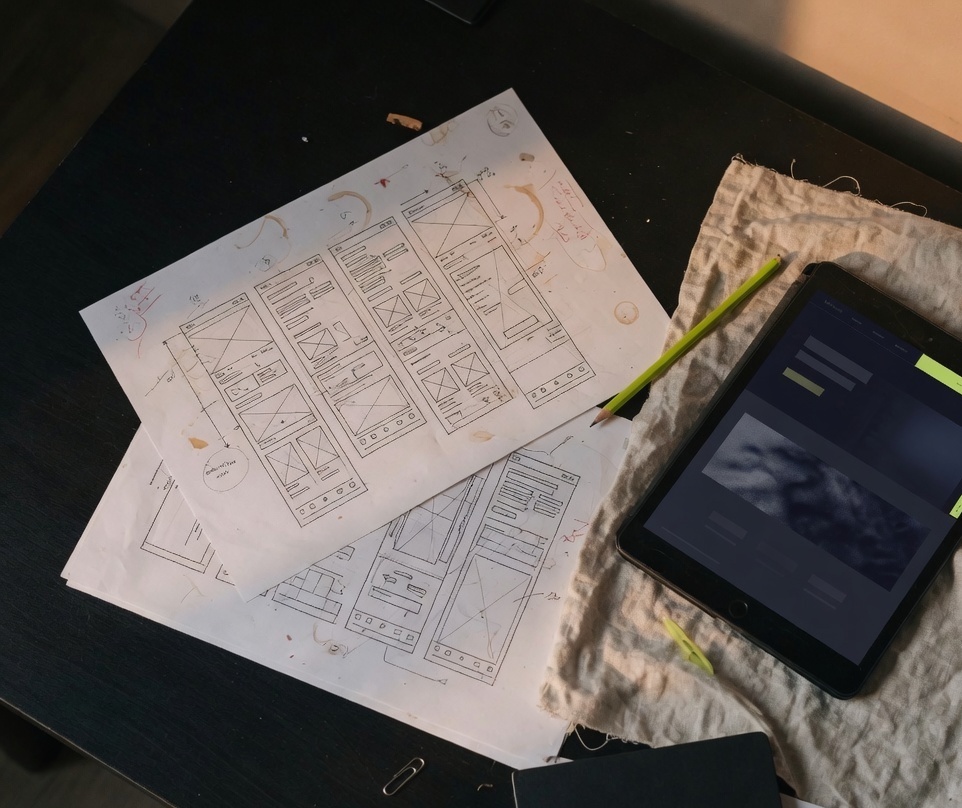
FAQ
Should I ever test the landing page and the creative in the same week?
No, not if you want a read. Change one. Google and Meta both assume a stable destination when they ask you to test ads. If the page is broken — slow, lying, no form — fix the page first and do not call it a creative test. If the page is clear, freeze it. Test the picture and the line.
How many creatives do I need for Meta’s Andromeda setup?
Enough to be different, not enough to be sloppy. Meta wants themes and messages that are actually distinct. Four patterns on one offer is a start. Fifty near-duplicates is production theatre. Their Dribbleup quote is about a tight in-house loop between making and buying, not about a number you should copy.
What if the winning ad has a worse CTR?
Keep it, if inquiries hold and the desk agrees they are real. Google already says a more specific ad can cut CTR and raise conversions. CTR is a diagnosis. Inquiry is the decision. Killing a quiet winner to chase a livelier click is how accounts get expensive and then get blamed on the page.
Can I report ROAS from a one-week creative test?
Not honestly. A week can rank pictures. It cannot close a sales cycle you do not have. Report spend, inquiries, cost per inquiry, and a short desk note on quality. Leave ROAS for a window finance will recognise. We will not invent one for a case study in this journal.
Do I need a new video if the still is winning?
No. Make the next still. Video is a pattern only when the motion is the point — a process, a face talking, a scene that stills cannot hold. A 15-second Ken Burns over the winning still is not a new pattern. It is a larger file of the same idea.
What do I send you if I want this run on an account?
The current URL, the four ads you would not mind freezing, last week’s spend, and the inquiry count with a sample of the actual inquiries. We will write back with which pattern we would kill first and which line we would keep. Send that pack. Do not send a brand deck.
The ad that survives is the one that still matches the page after the novelty is gone. Everything else was a click. We count the inquiry.
More from the journal
14 Aug 2026·19 min
YourGPT review: what it does after the demo
A practitioner review of YourGPT — what the agent platform actually is, what the plans cost, where it fails, and when we would not install it.

Josip Tomić
Partner

13 Aug 2026·12 min
You still rank #1. The visits are gone. Now what
You still rank number one. The visits are gone. A diagnostic for algorithm hits, AI Overviews that ate the click, and pages that never converted.
Kavya Iyer
Content lead